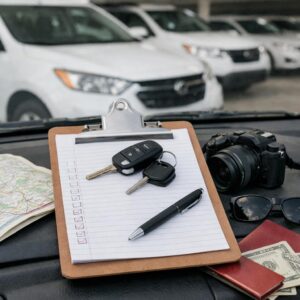

Transportation costs can quietly consume a large part of a travel budget. The best way to save is to choose a convenient place to stay, group nearby activities, and pay only for the journeys that genuinely require transportation.
Check transportation before booking accommodation. A cheaper room may cost more overall when it requires several paid rides every day.
Begin with four locations, not a list of transportation apps
Before comparing tickets or downloading apps, place the four most important points of the trip on a map. This gives you a clearer picture of the journeys you will repeat and the journeys that happen only once.
Airport, station or port
Identify the official bus, train, shuttle, taxi area, pickup rules, and expected travel time to your accommodation.
Your daily starting point
Check walking distance to transit, food, pharmacies, and the places you expect to visit most often.
Where most days are spent
Group attractions and appointments by neighborhood instead of crossing the city several times.
Trips outside the usual route
Separate road trips, rural visits, national parks, late-night events, and intercity transfers from ordinary local movement.
Once these points are visible, you can decide whether the trip is best served by public transportation, walking, a rental car, car sharing, occasional ride-hailing, or a mixture of several options.
Choose transportation by trip segment
Many travelers overspend because they choose one transportation method for the entire trip. Renting a car for seven days may be unnecessary when only two days involve places outside the transit network. At the same time, relying exclusively on buses may not be practical for an early flight or a remote route.
Arrival and departure
Compare the official airport or station connection with taxis, app rides, hotel shuttles, and private transfers. Pay attention to operating hours, luggage rules, pickup locations, and possible delays.
Daily movement inside the destination
For repeated journeys, compare individual transit fares with daily or multi-day passes. Walking may cover short central routes, while occasional paid rides can handle late evenings or difficult connections.
Intercity travel
Compare the complete journey, not only the ticket. A train may arrive in the center, while a cheaper flight may require airport transportation, baggage fees, and more waiting time.
Remote or vehicle-dependent days
A short rental can be more efficient than keeping a car for the full trip. Include fuel, parking, tolls, insurance options, taxes, and additional-driver charges.
| Option | Often practical when | Costs travelers forget | Check before paying |
|---|---|---|---|
| Walking | Destinations are close, routes are comfortable, and conditions are appropriate. | Time, heat, rain, steep streets, fatigue, and luggage storage. | Route safety, lighting, weather, accessibility, and closing times. |
| Public transportation | The city has useful routes near your accommodation and main destinations. | Airport supplements, card deposits, transfer rules, and missed-service alternatives. | Official fares, validation rules, operating hours, and reduced-fare eligibility. |
| Ride-hailing or taxi | The trip is late, direct, shared among several people, or difficult by transit. | Demand-based pricing, airport surcharges, tolls, waiting time, and larger-vehicle fees. | Official pickup zones, estimated total, payment method, and local licensing rules. |
| Rental car | You are visiting several remote places or traveling outside established transit areas. | Parking, fuel, tolls, insurance options, taxes, deposits, and extra drivers. | Total price, mileage, fuel policy, return time, restrictions, and cancellation terms. |
| Car sharing | You need a vehicle for a few local hours rather than a full day or week. | Membership, late return, mileage limits, tolls, cleaning, and damage responsibility. | Vehicle availability, service area, insurance terms, and return requirements. |
| Bike or scooter share | Distances are moderate and suitable infrastructure is available. | Unlock fees, per-minute charges, pause time, and out-of-zone penalties. | Traffic rules, helmet requirements, parking zones, weather, and route conditions. |
The accommodation location test
Compare two properties using the complete stay instead of the nightly rate alone.
Imagine that a property outside the center saves $25 per night, but staying there adds two $14 rides per day. The room appears cheaper while the trip becomes more expensive.
Also consider the non-financial cost. A long commute may reduce the time available for activities, force earlier departures, and make it harder to return to the room during the day.
Airport transportation deserves its own plan
Airport journeys often happen when travelers are tired, carrying luggage, and working against a deadline. That makes them especially vulnerable to poor comparisons and last-minute decisions.
Before arrival, confirm:
- Where the official bus, rail, shuttle, taxi, and app-ride pickup areas are located.
- Whether public transportation operates when your flight is expected to arrive.
- How much walking is required between the terminal and the transport stop.
- Whether children, large bags, mobility equipment, or late arrivals change the price.
- What backup option is available if the preferred service is delayed or closed.
A missed flight can cost far more than a transportation saving.
For departure day, choose an option with enough schedule margin. The lowest fare is not a good value when one delay could cause you to miss a flight, train, tour, or non-refundable reservation.
Trip transportation budget planner
Enter the expected total for each category. The tool calculates the complete transportation budget, the cost per traveler, and the average cost per traveler per day.
Use the total when comparing accommodation locations and transportation strategies. A room that costs more may still reduce the complete trip budget when it eliminates repeated paid rides.
Look for hidden costs before choosing the cheapest headline price
Rental car extras
Taxes, airport charges, insurance products, additional drivers, young-driver fees, fuel, toll programs, parking, and mileage restrictions can change the final amount.
Transit pass assumptions
A multi-day pass saves money only when the included routes and expected number of journeys match your itinerary. Do not buy one automatically.
Ride-hailing variability
Prices can change with demand, pickup area, vehicle size, waiting time, and local surcharges. A price checked at home may not match the amount shown during the trip.
Cheap but distant accommodation
Add the cost and time of returning every day. The difference becomes especially important for families or groups needing larger vehicles.
Intercity station location
Compare where the journey begins and ends. A low-cost terminal far outside the city can require two additional transfers.
Luggage and accessibility
Stairs, long platform changes, luggage fees, oversized equipment, and limited accessible service can make an apparently inexpensive route unsuitable.
A simple planning schedule
When choosing the destination area
Identify the main neighborhoods, airport connection, transit lines, and areas where a car would be inconvenient or expensive to park.
Before booking accommodation
Calculate at least one realistic route from the property to each major activity zone. Check the final evening service as well as daytime schedules.
One or two weeks before departure
Review official schedules and fare rules, reserve limited-capacity transportation, and confirm rental cancellation deadlines.
Before leaving home
Save reservation details, station addresses, pickup instructions, and a backup route. Download useful map areas where that feature is available.
During the trip
Group nearby activities, review the next day each evening, and avoid booking repeated short rides simply because no route was prepared.
Offline driving maps can be useful where mobile service is weak, but do not assume every navigation feature remains available without internet access. Download important routes and keep addresses saved separately.
Three transportation styles that can work
One pass, a walkable base, and a few paid rides
This works well when most activities are connected by reliable transit. Reserve taxis or app rides for arrival, late nights, or routes with difficult transfers.
Transit in the city and a short rental outside it
Use buses, trains, and walking for urban days, then rent a vehicle only for the portion of the itinerary that genuinely requires one.
A car for remote routes with carefully chosen parking
This may fit rural or multi-stop travel. Reduce costs by checking parking before arrival and avoiding unnecessary vehicle days in dense city centers.
When paying more can be the responsible choice
Transportation savings should not depend on ignoring safety, accessibility, health, or the consequences of missing an important connection.
A more expensive option may be reasonable when:
- You are arriving late in an unfamiliar area.
- The route involves isolated streets or unsafe conditions.
- A traveler has limited mobility or accessibility needs.
- The group is carrying children, heavy luggage, or valuable equipment.
- Extreme heat, cold, rain, or other weather makes walking unsuitable.
- A delay could cause a missed flight, train, medical appointment, or non-refundable booking.
Final checks before paying
- Confirm the final price rather than the initial advertised rate.
- Check whether taxes and required charges are included.
- Review cancellation and refund rules.
- Confirm the departure and arrival points.
- Check baggage, bicycle, stroller, and accessibility rules.
- Verify the final service time for the return journey.
- Save the address and instructions for the pickup location.
- Keep one backup option for important journeys.
- Review rental-car parking and fuel costs.
- Compare group cost rather than only cost per passenger.
For a trip that includes several driving days, see our guide on planning a road trip on a budget without overspending .
When deciding between a rental and a shared vehicle, review how to choose the right car rental or car-sharing service .
Quick answers
Is a public transportation pass always cheaper?
No. Compare the pass price with the number of journeys you realistically expect to make and confirm that the needed routes are included. Walking days and activities in one neighborhood can reduce the value of an unlimited pass.
Should I book accommodation outside the center to save money?
Only after adding daily transportation and travel time. A property farther away may still be a good choice when it sits near a direct transit line, but a low nightly price alone is not enough to determine value.
When is a rental car worth considering?
A rental may be practical for rural areas, remote attractions, multi-stop routes, or destinations with limited transit. Calculate the complete cost, including parking, fuel, tolls, taxes, and optional products.
How can a family reduce transportation costs?
Compare the total group price. Several transit tickets may cost more than one direct ride for a short journey, while family or reduced-fare rules may make transit more economical elsewhere.
What is the easiest transportation expense to overlook?
Repeated short rides are easy to underestimate. Recording every expected journey in advance usually gives a more accurate picture than budgeting only for airport and intercity transportation.
Sources and useful official guidance
- Federal Trade Commission — Renting a Car
- Federal Trade Commission — Factoring Rental Car Fees
- Google Maps Help — Download Areas and Navigate Offline
Schedules, fares, service areas, discounts, pickup rules, and transportation policies vary by location and can change. Confirm important details through the official airport, transit agency, rental company, car-sharing provider, or transportation operator serving your destination.

The Desert Car Share Editorial Team creates practical, independently researched guides about car sharing, vehicle rentals, insurance, travel costs, and road trips. Our content is reviewed using official sources, current rental policies, consumer guidance, and real-world travel considerations. We regularly update our articles to correct outdated information and help readers make safer, more informed transportation decisions.