
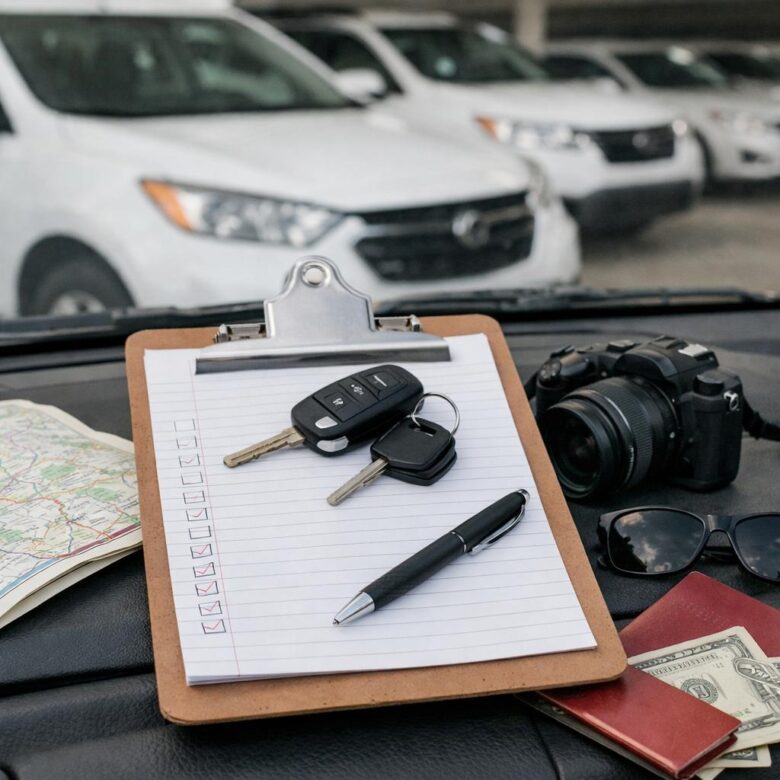
A road-trip rental should be planned around the route, not just the daily price. Mileage, luggage, weather, fuel, charging, tolls, insurance, driver fatigue, and the return schedule can matter more than saving a few dollars on the reservation.
Ask whether the vehicle, rental terms, and support network still work during the hardest part of the trip: the longest driving day, the most remote road, the worst expected weather, or the stop with the most passengers and luggage.
What a road-trip checklist should prevent
An unsuitable vehicle
A car may be inexpensive but too small for luggage, uncomfortable for long hours, inefficient for the route, or incompatible with child seats and mobility needs.
An incomplete price
Taxes, airport charges, one-way fees, protection, drivers, fuel, tolls, parking, equipment, and excess mileage can change the final cost.
A preventable dispute
Pickup and return photographs, receipts, written approvals, and an itemized agreement can clarify who is responsible for damage, fuel, mileage, or timing.
Define the trip before searching for a car
A short trip brief makes rental comparisons more accurate and reduces the chance of choosing a vehicle that works only on paper.
Estimate the full route, local driving, detours, hotel access, sightseeing, and the return journey.
Count adults, children, authorized drivers, car seats, mobility equipment, and expected luggage.
Note highways, mountains, remote areas, toll roads, ferries, borders, and any unpaved sections.
Consider heat, rain, snow, ice, wind, seasonal closures, and whether specialized equipment may be needed.
Include arrival time, branch hours, driving breaks, refueling or charging, and a realistic return margin.
Decide whether the car returns to the starting branch, another city, an airport, or an after-hours location.
Review the terms that can change the trip
Compare the final checkout total rather than the advertised daily rate. Include mandatory taxes, location charges, drivers, protection, equipment, and one-way costs.
Unlimited mileage is not guaranteed for every rate, vehicle, branch, or route. Check the included distance and the charge for exceeding it.
Confirm the starting level, required return level, approved fuel type, EV charging procedure, and any service cost for returning below the requirement.
Every person who may drive should meet the age, license, payment, and additional-driver requirements and appear on the agreement when required.
Review border crossings, ferries, remote regions, unpaved roads, restricted areas, and countries where the vehicle or roadside service may not be permitted.
Check the exact branch, deadline, operating hours, after-hours process, one-way approval, fuel requirement, and possible early- or late-return price changes.
Confirm the accepted card, deposit or authorization amount, debit-card restrictions, available-credit requirement, and estimated release process.
Save the reservation confirmation, total price, cancellation terms, fuel policy, mileage allowance, and any written permission involving borders, ferries, roads, or a different return location.
Choose the vehicle for the hardest day
Passenger and luggage fit
Consider usable seats rather than the maximum number advertised. Make sure luggage, strollers, car seats, wheelchairs, coolers, and other equipment can be carried without blocking visibility or passenger space.
Comfort over distance
Seat support, driving position, climate control, visibility, road noise, and cargo access become more important after several hours than they appear during a short pickup inspection.
Fuel use and range
A larger vehicle may provide more space but increase fuel costs. An electric vehicle may reduce fuel use while adding charging time and route-planning requirements.
Road and weather suitability
Do not assume an SUV automatically makes every road safe or permitted. Check seasonal equipment, ground clearance, drivetrain, tires, and the rental agreement’s road restrictions.
Rental categories do not guarantee an exact model.
Terms such as economy, compact, intermediate, SUV, or premium can represent different vehicles across companies. Unless the booking specifically guarantees an exact car, choose a category with enough margin for passengers and luggage.
Understand protection before arriving at the counter
Damage to the rental vehicle and liability to other people are separate risks. Medical expenses, belongings, roadside incidents, deductibles, loss of use, and administrative charges may also be handled differently.
Existing protection
Personal auto insurance, employer coverage, travel insurance, homeowners or renters insurance, and credit-card benefits may cover different parts of the trip. Confirm the destination, vehicle type, drivers, rental length, and trip purpose.
Rental-company products
Review damage waivers, liability products, accident coverage, personal-effects protection, and roadside plans separately. Buying or declining everything as one package can create duplication or leave a gap.
A credit-card benefit may focus on eligible damage or theft of the rented vehicle without providing liability protection. Some benefits require full payment with the card and rejection of the rental company’s collision or loss damage waiver.
For a fuller explanation, read what rental-car coverage you may actually need .
Special route conditions should be confirmed in writing
Permission may depend on the country and vehicle
Cross-border travel can require advance approval, extra documents, different protection, or a vehicle exchange. Unauthorized travel may affect roadside support or coverage.
The agreed destination must appear on the booking
Participating branches may permit a different return city, but the rate, mileage, availability, and drop charge can change with the route.
Fuel, charging, communication, and support become critical
Identify long gaps between services, mobile-coverage limitations, weather risks, road closures, and the provider’s process for breakdowns far from a branch.
Do not assume seasonal equipment is included
Check local requirements and whether winter tires, chains, or other equipment are available, permitted, required, or restricted under the agreement.
A capable-looking vehicle may still be contractually restricted
Ask whether the exact road is permitted. Driving on an excluded surface may affect assistance, damage responsibility, or the rental agreement.
At pickup, inspect the agreement and the vehicle
A clean-looking car can still have an incorrect fuel reading, undocumented damage, missing equipment, or an optional product added to the agreement.
Check the paperwork
- Dates, pickup time, and return deadline
- Pickup and approved return location
- Vehicle category and quoted rate
- Taxes and mandatory charges
- Protection products accepted or declined
- Fuel, charging, and mileage terms
- Authorized drivers
- Toll program and rented equipment
- Deposit or payment authorization
Check the car
- Bumpers, panels, doors, mirrors, and roof
- Windshield, windows, lights, and license plate
- Wheels, tires, and visible sidewall damage
- Seats, floor, cargo area, and odors
- Seat belts and child-seat arrangements
- Dashboard warnings, mileage, and fuel level
- Keys, cables, toll devices, and accessories
- Lights, wipers, mirrors, and defrosters
Take wide photographs of every side and closer images of existing damage. Record the dashboard after startup and use the rental company’s official damage-reporting process before moving the vehicle.
Do not leave with an unresolved safety concern.
A visibly damaged tire, persistent brake or steering warning, strong fuel smell, serious windshield obstruction, defective required light, seat-belt problem, fluid leak, or unusual mechanical behavior should be inspected by the rental company or resolved with a replacement vehicle.
Use the more detailed rental-car pickup inspection guide before leaving the lot.
Plan for the costs and decisions that happen on the road
Fuel, tolls, and parking
- Identify fuel or charging stops before remote stretches.
- Use the correct fuel type shown by the vehicle or provider.
- Understand how the rental toll device is billed.
- Check for cashless toll roads and city access charges.
- Keep fuel, charging, toll, ferry, and parking receipts.
- Read parking signs carefully to avoid tickets and towing.
Vehicle and support
- Monitor warning lights, tire concerns, and unusual behavior.
- Do not authorize non-emergency repairs without provider instructions.
- Save the rental company’s roadside number offline.
- Record support calls, messages, names, and reference numbers.
- Contact the company before changing drivers or destinations.
- Follow local accident and reporting requirements.
Do not build the schedule around nonstop driving
A rental may feel unfamiliar even when you are an experienced driver. New controls, different mirrors, luggage weight, weather, darkness, traffic, and long hours can increase fatigue.
Plan regular breaks, share driving only with authorized drivers, and avoid continuing when concentration declines. A slightly longer trip is preferable to rushing, speeding, or driving while drowsy.
An electric rental needs a route-specific charging plan
An EV can work well for a road trip when compatible charging is available where the car will actually travel and stop. The displayed range should not be treated as a guaranteed distance in every condition.
Compatibility
Confirm the connector, charging network, payment method, cable availability, and whether fast charging is supported.
Route margin
Allow for weather, speed, elevation, traffic, passengers, luggage, charger availability, and a backup charging stop.
Return requirement
Check the minimum battery level, charging fees, idle fees, and whether the rental location has a usable charging station.
Build the return into the itinerary
Confirm the branch and deadline
Review the address, operating hours, traffic, airport access, fuel or charging options, one-way instructions, and the procedure for an after-hours return.
Leave time for the contracted return condition
Refuel or recharge as required, remove trash and personal belongings, gather rented equipment, and allow for traffic, unloading, and finding the correct entrance.
Document the final condition
Photograph the exterior, interior, dashboard, fuel or battery level, mileage, parking position, keys, cables, and other returned equipment.
Obtain confirmation
Request an itemized receipt or check-in confirmation when possible. For an unattended return, follow the exact key-drop procedure and preserve your own record of the time and location.
Review later transactions
Keep the agreement, photos, receipts, messages, and final invoice until the card hold is released and any later toll, ticket, damage, or administrative charge has been reviewed.
Review how to avoid extra charges when returning a rental car before the final driving day.
Situations that deserve an extra call before booking
International travel
Confirm accepted licenses, International Driving Permit requirements, local protection, payment cards, deposits, border rules, toll systems, and emergency procedures.
Multiple drivers
Check whether each driver must appear at pickup, present a license, satisfy age rules, and pay an additional-driver charge.
Children or accessibility needs
Confirm child-seat compatibility, reserved equipment, door access, cargo capacity, mobility-device storage, and who is responsible for correct installation.
Late arrival or after-hours pickup
A reservation may not guarantee that a closed branch will hold the vehicle. Confirm flight-delay procedures, key access, payment verification, and support availability.
Road-trip rental checklist
Before booking
- Estimate the complete route and mileage.
- Count passengers, luggage, and authorized drivers.
- Choose a suitable vehicle category.
- Compare the complete price.
- Review mileage and fuel terms.
- Confirm insurance and damage responsibility.
- Check the deposit and payment method.
- Confirm borders, ferries, roads, and one-way travel.
- Save the reservation and current conditions.
At pickup
- Compare the agreement with the reservation.
- Confirm accepted and declined extras.
- Photograph every side of the vehicle.
- Record wheels, glass, roof, and interior.
- Capture mileage and fuel or battery level.
- Report existing damage officially.
- Check warning lights and essential controls.
- Save roadside assistance information.
During the trip
- Use only approved drivers.
- Keep fuel, charging, toll, and parking receipts.
- Plan breaks and avoid drowsy driving.
- Monitor weather and road closures.
- Report vehicle concerns promptly.
- Obtain approval before changing important terms.
- Preserve messages and support reference numbers.
At return
- Use the correct return location.
- Arrive before the agreed deadline.
- Meet the fuel or charging requirement.
- Remove belongings and trash.
- Return keys, cables, and rented equipment.
- Take final photographs.
- Request a return receipt.
- Review the final invoice and card statement.
Common planning mistakes
The cheaper listing may have higher location fees, limited mileage, inconvenient hours, or costly protection and driver charges.
A vehicle can technically seat the group while leaving no secure cargo space for bags, equipment, and supplies.
Limited mileage can become expensive on a multi-city route or when plans change during the journey.
Pressure and unfamiliar terminology can lead to duplicated protection or an important uncovered risk.
Without a starting record, it may be harder to show that damage, dirt, or an incorrect fuel reading existed before the trip.
Traffic, fuel, charging, airport access, unloading, and inspection can turn a precise deadline into a late return.
A successful rental starts before the keys are handed over
Begin with the complete route, passengers, luggage, roads, weather, mileage, and return plan. Then select a vehicle and agreement that remain practical throughout the journey.
Before driving, compare the contract with the reservation and document the car. During the trip, preserve receipts, use only authorized drivers, monitor the vehicle, and contact official support instead of improvising.
At return, follow the time, location, fuel, charging, and equipment requirements and create a clear record of the vehicle’s final condition. These habits cannot remove every legitimate cost, but they reduce avoidable surprises and make later questions easier to resolve.
To organize the wider travel budget, read how to plan a road trip without overspending .
For a closer look at pricing, review hidden rental-car fees and how to avoid paying more .
Common questions
Is unlimited mileage necessary for every road trip?
No. A limited-mileage rate may work for a short, fixed route. For a long or flexible journey, compare the planned distance and a reasonable detour margin with the included allowance and excess-mileage rate.
Should I reserve a larger car than I think I need?
Choose enough space for passengers, luggage, child seats, and necessary equipment without paying for unnecessary size. Because exact models may not be guaranteed, leave some margin when the group is near a category’s stated capacity.
Can I drive a rental car across a border?
Sometimes, but only after checking the rental company’s current policy. Written permission, additional documents, different protection, vehicle restrictions, or extra charges may apply.
What should I photograph before driving?
Record all sides of the vehicle, bumpers, doors, mirrors, roof, wheels, tires, windshield, lights, interior, cargo area, license plate, mileage, and fuel or battery level. Photograph existing damage closely and report it officially.
Is full-to-full always the best fuel policy?
It is often easier to control because you choose where to refuel, but it is not automatically best for every trip. Compare convenience, return timing, local station access, prepaid terms, and the charge for missing the required level.
What should I do if a warning light appears during the trip?
Move to a safe location when necessary and contact the rental company’s official roadside or support channel. Photograph the dashboard and follow provider instructions rather than continuing with an unexplained safety or mechanical problem.
How early should I arrive for the return?
Leave enough time for traffic, refueling or charging, unloading, finding the correct return area, taking photographs, and completing the inspection. Do not rely on a universal grace period.
Is an electric rental suitable for a long road trip?
It can be when the route has reliable compatible charging, the schedule allows charging stops, and the return requirement is practical. Remote routes, extreme weather, limited chargers, or a tight schedule may require more planning.
Sources and official guidance
- Federal Trade Commission — Renting a Car
- National Highway Traffic Safety Administration — Summer Driving and Road-Trip Tips
- National Highway Traffic Safety Administration — Winter Driving Preparation
- National Highway Traffic Safety Administration — Drowsy Driving Guidance
- National Highway Traffic Safety Administration — Driving in Severe Weather
- U.S. Department of Energy — Electric-Vehicle Charging Station Locator
Rental prices, deposits, protection, mileage, fuel policies, equipment, road restrictions, border permissions, vehicle availability, and return procedures vary by provider, country, branch, vehicle, driver, and date. Confirm the current written conditions for the individual reservation.

The Desert Car Share Editorial Team creates practical, independently researched guides about car sharing, vehicle rentals, insurance, travel costs, and road trips. Our content is reviewed using official sources, current rental policies, consumer guidance, and real-world travel considerations. We regularly update our articles to correct outdated information and help readers make safer, more informed transportation decisions.